
Finished reading: In the Dark Places of Wisdom by Peter Kingsley. The pre-Socratics as you’ve never seen them before. (Plato & Aristotle are the villains.) 📚
Finished reading: In the Dark Places of Wisdom by Peter Kingsley. The pre-Socratics as you’ve never seen them before. (Plato & Aristotle are the villains.) 📚

Finished reading: Mere Christianity by C. S. Lewis. A much stranger & more interesting book than I remembered! 📚

Currently reading: Against the Machine by Paul Kingsnorth 📚
Currently reading: The Club by Leo Damrosch 📚
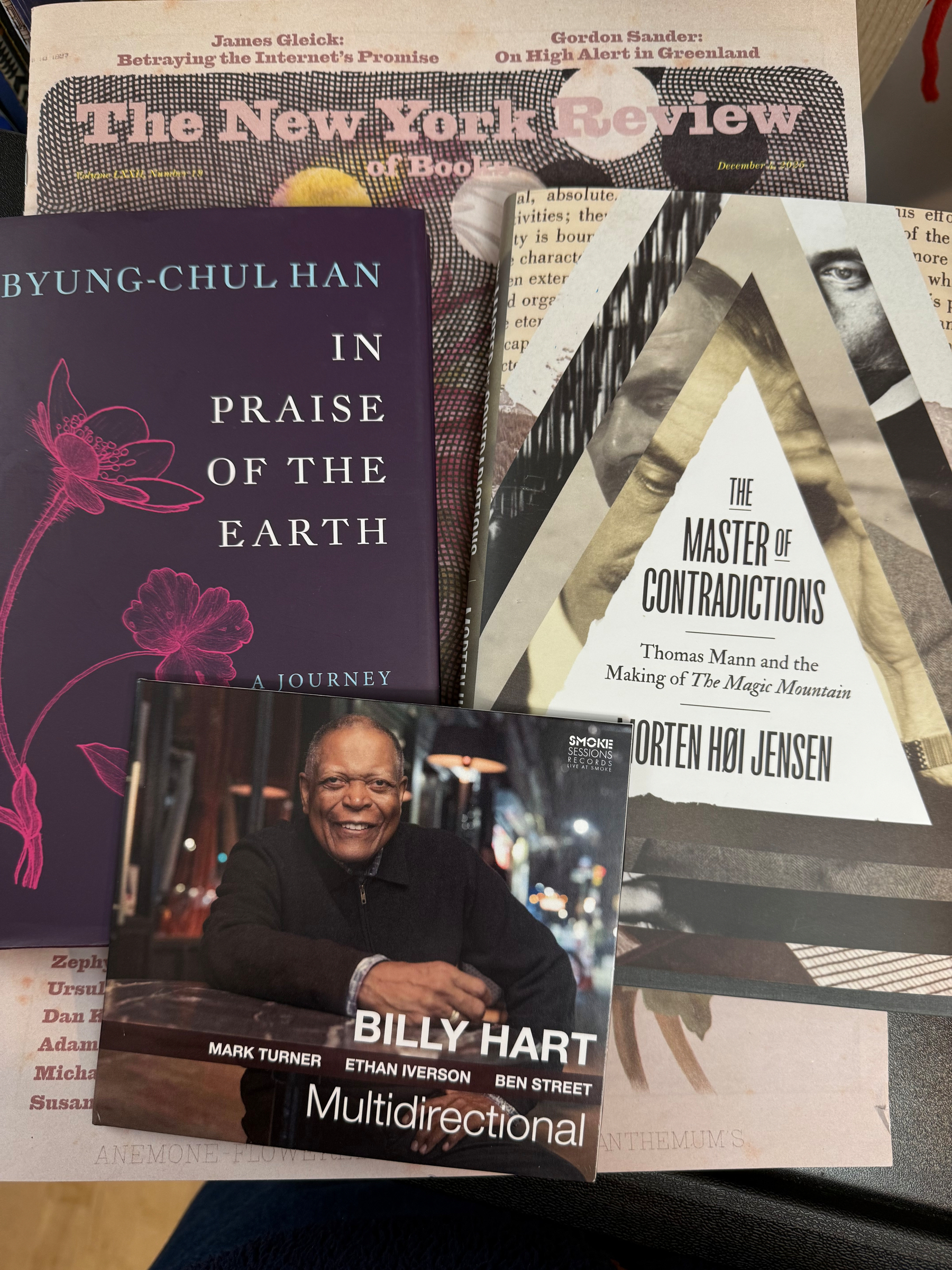
Between the bookstore, Bandcamp, & the good ol’ USPS, Christmas came early for me today! 🎶📚
Currently reading: Alexander Hamilton by Ron Chernow 📚
Currently reading: In Search of Lost Time, Volume II by Marcel Proust 📚
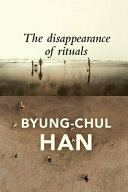
Currently reading: The Disappearance of Rituals by Byung-Chul Han 📚

Finished reading: Frost: Poems by Robert Frost.
I don’t think I ever really realized how powerful & profound Frost is—until this reading. The simplicity of his diction both masks & reveals a vision of strange, silent, often terrifying loneliness, along with rare moments of profound connection with other people & the natural world. I will be returning to Frost much more regularly in the future. 📚
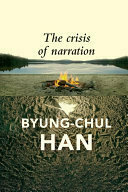
Finished reading: The Crisis of Narration by Byung-Chul Han.
Provocative in the first half; unsatisfying in the second. Han is laser-focused on the core problems of modernity but his books are so short they feel, at times, perfunctory. 📚
Currently reading: In Search of Lost Time, Volume II by Marcel Proust 📚
Currently reading: Frost: Poems by Robert Frost 📚
Currently reading: The Crisis of Narration by Byung-Chul Han 📚

Finished reading: The Poisoned King by Katherine Rundell 📚
I recently finished Katherine Rundell’s wonderful new volume in her Impossible Creatures series and had to write a few words about it. In short, I doubt there’s a better week for it to have been released. If you could use some hope, this is one place to find it. 📚
Cannot wait to dive into this one! I had to fend off two small but voracious children to preserve my claim. Fortunately I was up to the task. 💪📚
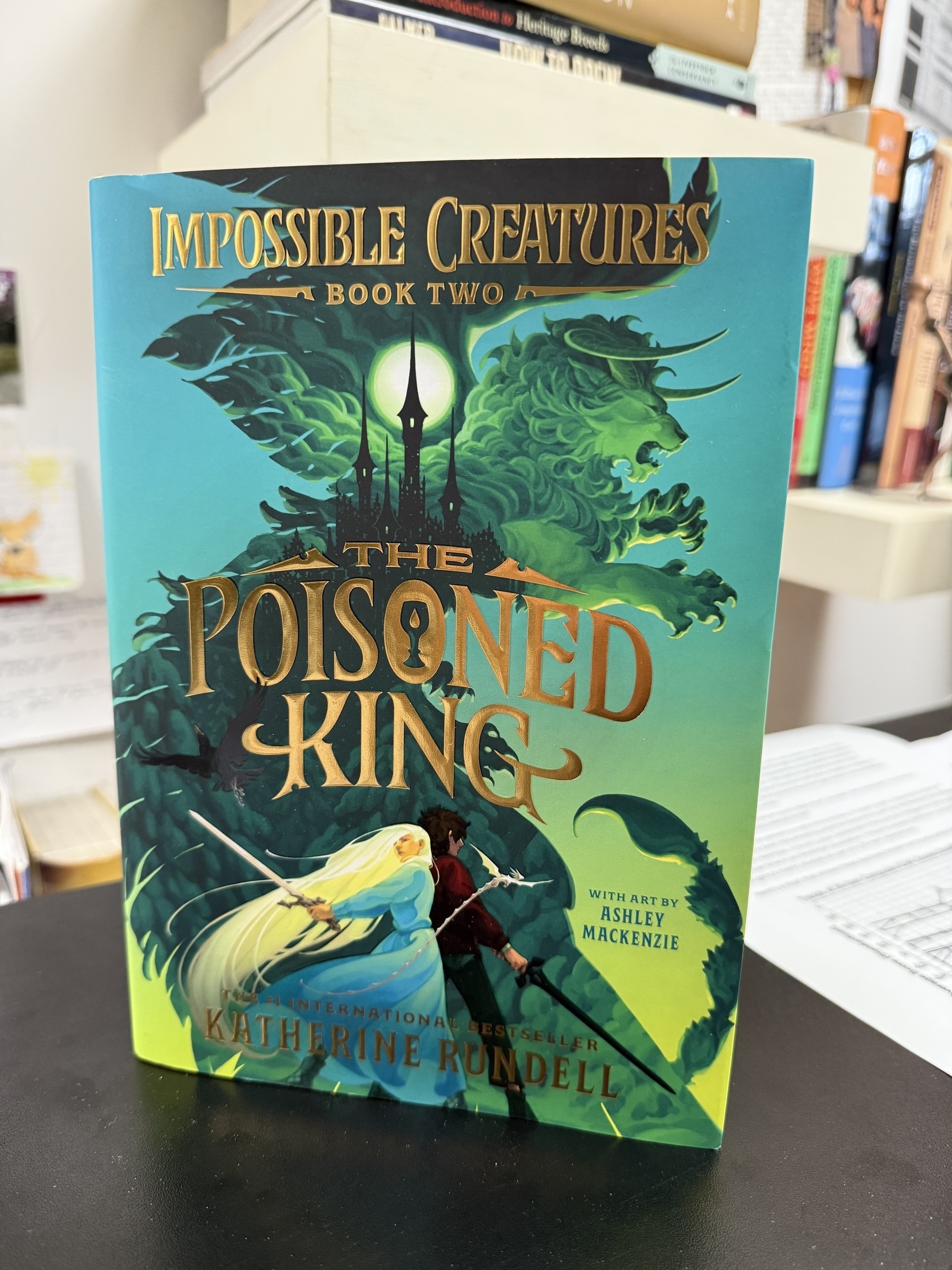
Currently reading: The Poisoned King by Katherine Rundell 📚

Currently reading: All Things Are Full of Gods by David Bentley Hart 📚
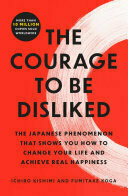
Finished reading: The Courage to Be Disliked by Ichiro Kishimi.
Some books feel like they’re written just for you. This one has some sections that I really needed to think through while reflecting on my life, the assumptions I tend to make about myself, & the way the world works in general.
Plus, I enjoyed learning about Alfred Adler, who was part of the same Vienna circle as Freud and his disciple Jung—but who reached very different conclusions about the human person & the role of psychology. 📚
Currently reading: The Courage to Be Disliked by Ichiro Kishimi 📚

Finished reading: The Son by Philipp Meyer.
This book is incredible—I see why some think it’s the novel of the century so far. It follows one remarkable Texas family for 150 years, telling the family’s story through the interwoven lives of, primarily, three of its members. 📚

Finished reading: Lacunae by Scott Cairns 📚

Finished reading: Effortless Mastery by Kenny Werner 📚
Currently reading: The Son by Philipp Meyer 📚
Currently reading: Effortless Mastery by Kenny Werner 📚
Currently reading: Lacunae by Scott Cairns 📚
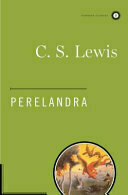
Finished reading: Perelandra by C.S. Lewis. Read this one, & Out of the Silent Planet, with my daughter. We’ve both loved both books, so it’s on to That Hideous Strength! 📚

Currently reading: The Marble Faun by Nathaniel Hawthorne 📚

Currently reading: The Lords of Limit: Essays on Literature & Ideas by Geoffrey Hill 📚
Finished reading: Vita Contemplativa by Byung-Chul Han 📚
Currently reading: King Lear by William Shakespeare 📚

Finished reading: Concerning the Future of Souls by Joy Williams. Subtitle: 99 Stories of Azrael.
Holy smokes this is a cool book. Vintage Williams, wild & strange & unforgettable. 📚

Finished reading: Lord Emsworth and Others by P. G. Wodehouse 📚

Currently reading: Collected Fictions by Jorge Luis Borges 📚
Currently reading: Concerning the Future of Souls by Joy Williams 📚
Currently reading: All Things Are Full of Gods by David Bentley Hart 📚

Finished reading: Middlemarch by George Eliot 📚

Currently reading: Entangled Life by Merlin Sheldrake 📚

Currently reading: Range by David Epstein 📚

Currently reading: The Artist’s Way by Julia Cameron.
Oft recommended; I’m reading it & going through all the exercises with my mother. Grateful she suggested this idea! 📚
Luke Burgis offers a reading list for creators & entrepreneurs.
Personally, I’d replace Mill & Emerson with Middlemarch & any Jane Austen. And add McGilchrist as the third book for this century, along with some poetry.
But it’s an excellent set of books nonetheless! 📚

Finished reading: When Breath Becomes Air by Paul Kalanithi.
What a remarkable book. I love academic memoirs, & this fits within that genre—but pushes well beyond it as well. It’s also a profound meditation on cancer, mortality, healthcare, poetry, faith, love, & family. Highly recommended. 📚
Currently reading: Middlemarch by George Eliot.
An old favorite. Profound from the first paragraph. 📚

Finished reading: Moonbound by Robin Sloan.
So great! Handed it off to my daughter—she’s 11; I’m sure she’ll enjoy it just as much. 📚

Finished reading: Night Train by A. L. Snijders.
Wonderful microstories, translated by Lydia Davis. Highly recommended. 📚
Currently reading: When Breath Becomes Air by Paul Kalanithi 📚
Currently reading: Moonbound by Robin Sloan 📚
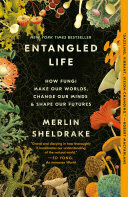
Want to read: Entangled Life by Merlin Sheldrake 📚
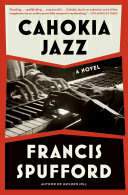
Finished reading: Cahokia Jazz by Francis Spufford.
This book is incredible—it connects many of my interests: jazz, counterfactual American history, religion, noir; the characters are wonderfully unique; the plot is gripping. Highly recommended! 📚
Currently reading: Night Train by A. L. Snijders.
Very short stories translated from Dutch by Lydia Davis (who herself writes brilliant microfiction). 📚
Currently reading: The Shield of Achilles by W. H. Auden 📚
Currently reading: Cahokia Jazz by Francis Spufford 📚

Finished reading: The Dark Forest by Cixin Liu 📚

Currently reading: A Time to Keep Silence by Patrick Leigh Fermor 📚

Currently reading: Aspects of Truth by Catherine Pickstock 📚

Currently reading: If On A Winter’s Night A Traveler by Italo Calvino.
Christmas: the perfect time to reread old favorites. 📚

Currently reading: The Blue Flower by Penelope Fitzgerald 📚

Finished reading: Station Eleven by Emily St. John Mandel 📚
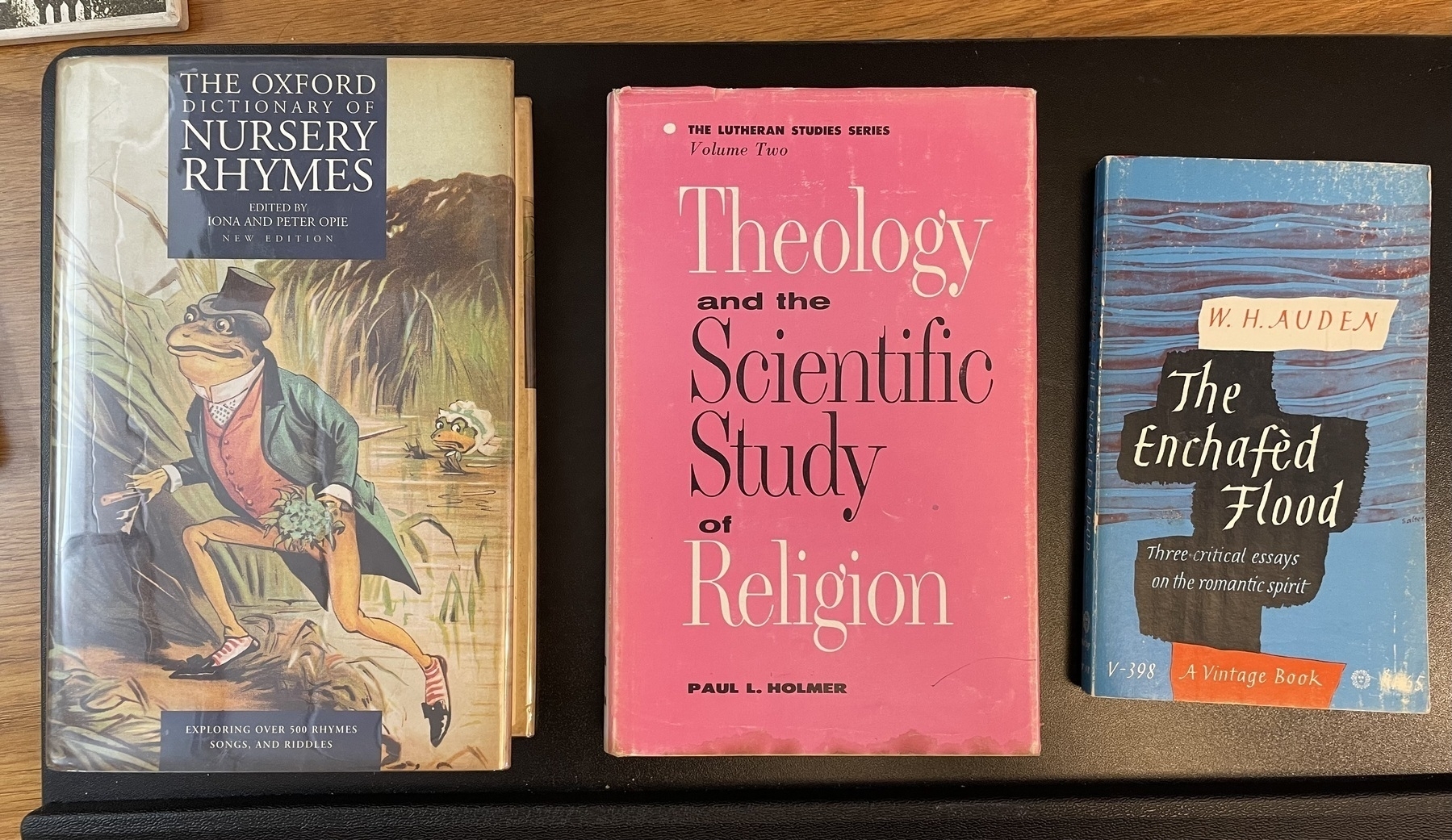
Great day at the used book store 📚

Finished reading: The New Leviathans by John Gray.
A book with no single overarching thesis beyond an examination of how liberal democracy is in crisis in the West, and how the alternatives at the moment, primarily Russia and China, are… unsavory.
Gray’s book, just 3 brisk chapters, helpfully resuscitates Hobbes as interested in the wide range of forms Leviathan can take to provide order, peace, and freedom to its citizens. Unfortunately, all of these are more or less totalitarian—which is why Gray finds in Hobbes a helpful thinker for our age, in which the world is converging on forms of surveillance capitalism:
The seeming triumph of liberalism and the free market was not an evolutionary trend but a political experiment, which has run its course. The result has been to empower regimes in which market forces are instruments of the state.
Instead of China becoming more like the West, the West has become more like China.
The middle chapter of the book is composed of a series of short vignettes of different disenchanted Soviet political thinkers, poets, & artists, such as Konstantin Leontiev, Vasily Rozanov, Dostoevsky, Alexander Boldyrev, Polina Barskova, Daniil Kharms, Jósef Czapski, and Teffi—most of whom have been forgotten by history; all of whose lives and writing, however abortive, provide a testament to the horrors of life under the Soviets.
In the book’s first and final chapters, Gray turns his attention to the ways in which our new Levianthans are different from Leviathan as Hobbes imagined it:
The goals of Hobbes’s Leviathan were strictly limited. Beyond securing its subjects against one another and external enemies, it had no remit. The purposes of the new Leviathans are more far-reaching. In a time when the future seems profoundly uncertain, they aim to secure meaning in life for their subjects. Like the totalitarian regimes of the twentieth century, the new Leviathans are engineers of souls.
Even as our surveillance and industrial-agricultural technologies are become more and more powerful, though, natural is fighting back. Gray suggests that these new Leviathans may be tamed by nature herself, as climate change resists our efforts to feed billions. Future prospects are grim, however much “progress studies” rational optimists fill our feeds.
In the end, as a skeptical, humanistic Christian, I appreciate Gray’s skeptical, pessimistic, atheistic humanism. He doesn’t pretend the Christian roots of our current liberal order can be jettisoned without massive cost. Despite the bleakness of his outlook, he ends with not a call to arms, but a call to life:
If we go on, it is because we cannot do otherwise. It is life that pulls us on, against the tide, life that steers us into the storm.
Not quite stirring words, though one gets the sense they’re as rousing as Gray can muster.📚

Currently reading: Your Face Belongs to Us by Kashmir Hill 📚

Currently reading: Toward the Winter Solstice by Timothy Steele 📚
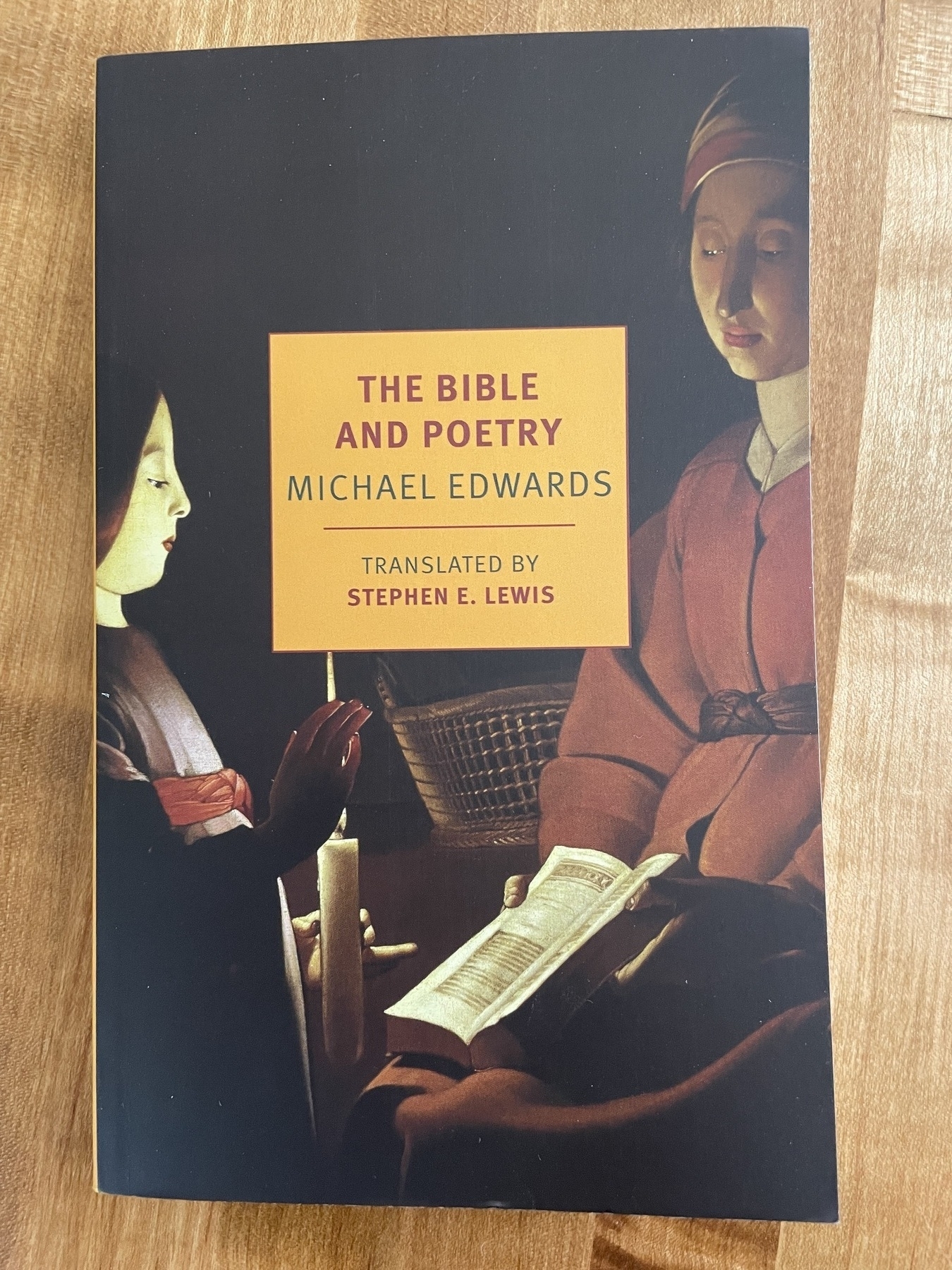
Finished reading: The Bible and Poetry by Michael Edwards.
A fascinating and very idiosyncratic look at Scripture, from an unexpected quarter: Edwards is a member of the Académie Française and one of the world’s leading Racine scholars. If you’ve ever wondered why so much of the Bible is poetry, and how that fact should influence your reading of Scripture, this is a very good starting point.
Plus, anything published by New York Review is worth reading at least once. 📚
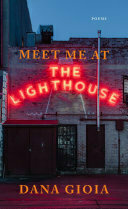
Finished reading: Meet Me at the Lighthouse by Dana Gioia.
A delightful collection of poems, songs, & a few translations. I especially loved the closing sequence, “The Underworld.” I read “The Ballad of Jesús Ortiz” aloud to me daughter, & she loved that. 📚
Tyler Cowen draws attention to the remarkable life and work of the Catholic religious scholar R.C. Zaehner, whose Wikipedia page is, indeed, fascinating and wild. 📚
Currently reading: The Bible and Poetry by Michael Edwards 📚
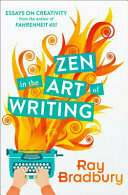
Finished reading: Zen in the Art of Writing by Ray Bradbury.
I love Bradbury’s simple, relentless enthusiasm for writing. 📚
One should act like a man of thought, and think like a man of action.
~Henri Bergson, quoted by Iain McGilchrist in The Matter with Things 📚🏡
Can’t wait to dig into this one. 📚
Currently reading: Zen in the Art of Writing by Ray Bradbury 📚
It’s incredible how many good book groups, seminars, & tutorials the Catherine Project is offering this fall—and all for free! I’d love to join them all. 📚

Currently reading: In Search of Lost Time Volume I Swann’s Way by Marcel Proust.
It’s been a decade or so. Just 25 pages in, I can’t believe how many gems I’ve already forgotten. 📚
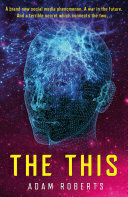
Finished reading: The This by Adam Roberts.
Lots to think about with this delightful book. Roberts calls it a Hegelian sequel to his Kantian book The Thing Itself. I think it can be equally read as a sort of hellish prequel to Purgatory Mount (is Paradise next?), or as a sci-do cautionary-tale companion to Nita Farahany’s The Battle for Your Brain.
In any case, science fiction at its strangest & best. 📚
Currently reading: The This by Adam Roberts 📚
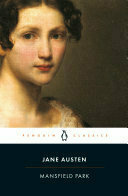
Finished reading: Mansfield Park by Jane Austen.
Rather sobering to have finished it on Father’s Day. But, like all of Austen, full of wisdom: a reflection on good judgment. 📚
My friend Rick recently helped design a book of poems about Parkinson’s disease.
The book is written by John Foley and illustrated by the great Mary GrandPré of Harry Potter fame.
Download a copy for free here. Hope you find it encouraging! 📚
Currently reading: Mansfield Park by Jane Austen 📚
NB, publishers: describing an author as a “Forbes 30 Under 30 scientist” makes me want to read their book much, much less. 📚

Finished reading: Laurus by Eugene Vodolazkin.
My second read; it’s as beautiful and profound as it was the first time through.📚
I’m heading to Chicago this weekend for a birthday celebration with my father & brother. I’m eager for some bookstore recommendations. Any advice, Chicagoans? 📚
On Brad East’s blog, Denise Levertov’s Good Friday poem “On a Theme from Julian’s Chapter XX”:
Every sorrow and desolation He saw, and sorrowed in kinship.
✝️📚🔗
[Early book collectors] supported the lively culture of book hunting that still goes on, diminished but not dead yet, in the auction houses and antiquarian bookshops of New York, Boston and other cities.
Can this gentle, humane culture survive the attritions of social media and the carceral state? In a way, it already has.
~Anthony Grafton, in an delightful LRB review-essay of Denise Gigante’s new book. 📚

Currently reading: The Secret Commonwealth by Robert Kirk
A gloriously strange book from 17th-century Scotland. 📚
What is mobile is always the most just.
~Robert Walser. So many great sentences in Walser. 📚
Every last silly little thing has its unspeakably swift justification, its good clever grounds.
~Robert Walser in 1907, writing about the Internet 📚
Currently reading: Berlin Stories by Robert Walser 📚
I encountered a stunning book of photos on the Getty’s website today: Kazumasa Ogawa’s Some Japanese Flowers, from 1896.
19th-century photograph is always shocking & disorienting—how foreign, yet contemporary. 📚

Currently reading: The Battle for Your Brain by Nita A. Farahany 📚
Her contention is that control over our own inner life will become increasingly fraught in coming years, as advances in neurotech & pharma combine to create new ways of monitoring, interpreting, & responding to our brainwaves.
I’m only a couple chapters in, but she lays out so clearly how tech is building on-ramps to this surveillance—through gamification, virtual reality, & other developments that are pitched as innocuous & “free”.
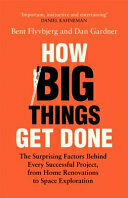
Finished reading: How Big Things Get Done by Bent Flyvbjerg 📚
For the most part, a very good and useful book on project management—research grounded in reality, presenting some useful heuristics. Fans of Taleb & Kahneman/Tversky will like it.
What happened to literary studies?
If professionalization was the flaw in the construction of the bridge, making it unstable, it turns out there’s a meteor heading for the bridge anyway: the steady diminution of literature’s role in a culture where electronic, networked media is dominant. […]
By lowering the barrier to entry, the Internet encouraged an early 21st-century efflorescence of occasional criticism and spontaneous theorizing that fostered vibrant subcultural readerships.
I believe that the coming decades will be shaped by a restoration of the humanities to non-professional, non-credentialed, non-university contexts. The Internet will continue to provide new forms not just for criticism but for pursuing literary education outside formal degrees.
This will be a good thing, though, sadly, it will be accompanied by the closure of many liberal arts colleges.

Finished reading: Skin in the Game by Nassim Nicholas Taleb 📚
Currently reading: How Big Things Get Done by Bent Flyvbjerg 📚
Currently reading: Night Train by A. L. Snijders; translated by Lydia Davis 📚

Currently reading: War and Peace by Leo Tolstoy 📚
Currently reading: Skin in the Game by Nassim Nicholas Taleb 📚
Just because we don’t believe in aesthetic standards as a culture doesn’t mean we aren’t making constant aesthetic judgments that rely on a wide range of hierarchies:
[Study authors] found that writers ‘with an elite degree (Ivy League, Stanford, University of Chicago) are nine times more likely to win than those without one. And more specifically, those who attended Harvard are 17 times more likely to win.’ They found that half of the prize-winners with an MFA “went to just four schools: [University of] Iowa, Columbia, NYU, or UC Irvine. Iowa has special clout: its alumni ‘are 49 times more likely to win compared to writers who earned their MFA at any other program since 2000.'"
I find the author’s conclusion inspiring:
Today when asked for advice about how to be a writer, I say: Find writing you love and follow it. Make those writers your writers. Read each other, publish each other, create literature that speaks from where you are.
You don’t need a BA to do this, much less an MFA. We need to rebuild cultural institutions outside the confines of our academic-media-publishing complex.
Rowan Williams reviews Iain McGilchrist’s The Matter With Things. A masterful and appreciative review, unsurprisingly.
Williams points out that so many criticisms of McGilchrist’s work reflect exactly the tendencies that McGilchrist traces and decries in his work.
He also rearticulates McGilchrist’s exceptionally helpful descriptions of thinking, truth, science, and objectivity:
Thought takes time; encountering a limit suggests new questions — including the question of whether we have thus far been asking the right questions. Thinking develops, but that does not mean that it follows a linear path towards determinatively complete representation. It must, by its very nature, manage and reflect upon its own incompleteness and the inescapability of difficulty and mystery.
I’m now over halfway through the first volume of The Matter with Things; as with Williams, I can’t recommend it highly enough.

Finished reading: A Gentleman in Moscow by Amor Towles 📚

Finished reading: The Nature of Oaks by Douglas W. Tallamy 📚
Derek Thompson’s short, pensive essay on his own entanglement with effective altruism (EA) and Sam Bankman-Fried leaves off before getting to a problem that enabled both, a problem with the Internet in general: we humans just seem to be at our best when operating locally, in-person.
Just as crypto’s promise of “trust in a trustless world” struck many as ridiculous, so too EA has been ridiculed for its impersonal approach to altruism. George Eliot in Middlemarch; Dickens in Bleak House; Trollope in The Way We Live Now: each of these novelists understood & satirized the ways in which, aided by finance, we are always tempted to abstract ourselves away from our local communities and traditions.
Heeding their warning may make our altruism less “efficient,” but perhaps that’s ok—perhaps less altruism is required when our communities are healthy, robust, and based on trust, rather than writing it off as an impossibility in a “global age”?
In other words, perhaps the problem isn’t that Thompson was taken in by two major Internet-based movements that both just happened to be off in ways that permitted someone like SBF to trick his way through. Perhaps it’s simply that the SBFs in our society who are most perfectly situated to exploiting the “trustless” (impersonal, inscrutable) frameworks we inhabit. After all, SBF seems not to have flourished in the more traditional institutions he inhabited.
Currently reading: The Nature of Oaks by Douglas W. Tallamy 📚
Instead, beauty effects a completeness that strengthens our capacity to be open and hospitable. It is fitting, in this respect, that we tend to think of giving the quality of beauty, more directly than the quality of truth or goodness, to our background surroundings, the encompassing atmosphere inside of which our existence unfolds.
~from Love and the Postmodern Predicament
Saddened to learn of Hilary Mantel’s sudden and untimely death at the age of 70. Her Wolf Hall novels are brilliant; what vivid historical imagination. R.I.P. 📚

Finished reading: The Elementary Particles by Michel Houellebecq. Profoundly bleak, even for Houellebecq, though there are some moments of beauty, particularly late in the novel. 📚

Finished reading: Darkness at Noon by Arthur Koestler. An amazing novel of revolutionary consciousness, conscience, & truth. 📚

Finished reading: The Life We’re Looking For: Reclaiming Relationship in a Technological World by Andy Crouch.
A wise essay on the importance of instruments, households, and history in resisting the technological idols of our age.📚
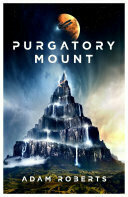
Finished reading: Purgatory Mount by Adam Roberts 📚

Finished reading: Bells In Winter by Czeslaw Milosz 📚
In life and work alike, his contradictions are pressed together like layers in metamorphic rock. It is in the nature of monoliths not to grow old.
~Alex Ross on Thomas Mann, in the New Yorker. My favorite Mann is The Magic Mountain—it speaks with clarity to our world. 🔗📚
I finally finished Iain McGilchrist’s The Master & His Emissary this morning. It’s taken me about 6 months, but the time was well spent—the book is as rich in neuroscience and psychology as in historical and cultural analysis, & a profound guide to our current cultural dislocations.
It’s earned a place in my personal pantheon—one of the best books I’ve read, and one I will return to often in years to come. 📚
Max Richter, giving Auden pride of place in his Recomposed Four Seasons headshot. (The album is very good.) 🎶📚
I relished Roy Foster’s Conversation with Tyler on Irish history, economics, and culture. I read Foster’s Modern Ireland years ago, and I’m eager now to read his books on Yeats and Heaney. 📚 🔗 🎧
“We’re moving towards disaster, guided by a false image of the world; and no one realizes.”
~ Michel Houellebecq, from an excellent profile by Justin E.H. Smith 🔗📚
The world needs more Cavafy 📚

Finished reading: Tradition and Apocalypse by David Bentley Hart 📚
Unsurprisingly if you’ve read much DBH, this is a very strange book. I’d highly recommend chapters 1, 6, & 7 for a compelling vision of Christian belief & practice oriented not just to the past but to the future. The middle chapters on Newman & Blondel? Quite dry by comparison.

Finished reading: London’s Fields by Mark Waldon 📚 ⚽️
A delightful oral history looking at some of London’s football clubs: their histories, rivalries, grounds, & fan bases. I most enjoyed chapters on Orient, Millwall, Brentford, Wimbledon, Fulham, & Charlton—clubs that don’t get much attention state-side.

Eswar Prasad, The Future of Money
Reading Eswar Prasad’s The Future of Money was an odd experience. Let’s start by clarifying the author’s starting point. Prasad is the definition of an elite:
I mention all these roles not to impress you, but rather to give you a sense of what to expect from The Future of Money: cryptocurrency filtered through the perspective of someone deeply entrenched in the structures, institutions, and frameworks that define the world as it currently is.
That perspective has some real value: Prasad is a remarkably lucid explicator of those elements of crypto that he cares to understand. For instance, his plain-language explanations of the technical details of Bitcoin and of the distinctions between proof of stake and proof of work are both clear and thorough. They’ve increased my own understanding of the technical details of crypto.
Similarly, and unsurprisingly, Prasad provides an exceptionally interesting overview of the current state of money:
Overall, Prasad’s book shines in explicating how we got to where we are, from a global economic perspective. But Prasad’s perspective has some very obvious and very unsurprising blind spots.
For one, though he refers fairly often to issues relating to privacy, he doesn’t seem to really “get” the degree to which crypto advocates are advocating for *decentralization—*the degree to which crypto is not fundamentally about economics but about politics, governance. He’s skeptical (and rightly so) of claims that Bitcoin and most other cryptos offer privacy and anonymous transactions. But this isn’t what decentralization advocates are getting at. The degree of privacy offered by Bitcoin is still far superior to the degree of privacy offered by the central bank digital currencies (CBDCs) that Prasad thinks are the likely long-term digital-money solution. (To his credit, he’s quick to acknowledge the privacy challenges [quite the euphemism, in this case] that CBDCs present. But he’s certainly nowhere near terrified enough of these challenges for my taste.)
The need for political imagination is also far greater than Prasad acknowledges or seems capable of himself. Prasad wants the global order to remain more or less as it is. But for those less-well-served by this existing order, what are the alternatives? The populist revival? Some sort of web3 or other tech-driven new economic order? Just trudging along trying to survive? Or something even more violent and unsettling? Our economic and social problems need far greater solutions than CBDCs. For all their many flaws, web3 projects do suggest some remarkably creative new economic possibilities.
Do I recommend it? Well, if you have time for 375 pages that ultimately make an inconclusive case for the exisiting global order, sure. But while the economics and history are interesting, Prasad’s political imagination is simply too conventional, too obvious, too elite. The sort of book that tries to convince you that CBDCs are coming, no matter what you do, but don’t worry too much about it.
Incredibly excited for the future of Slant Books. They have some wonderful titles coming in their first year as an indie not-for-profit press. 🔗📚
R.I.P, Robert Bly, one of Minnesota’s great poets. I’ll remember him most for his translations of Thomas Tranströmer; among if not the first translations into English of the incredible Swedish poet. 📚 🔗
Currently reading: The Future of Money: How the Digital Revolution is Transforming Currencies and Finance by Eswar S. Prasad 📚
R.I.P., great author, publisher, and literary scholar Roberto Calasso 📚 🔗

Currently reading: Bill Evans: How My Heart Sings by Peter Pettinger 📚

Currently reading: The Master and His Emissary by Iain McGilchrist 📚
Robert Pogue Harrison reviews several recent books by and about the wonderful Shirley Hazzard. 📚
As she once remarked to me, were Virgil to sail into [the Bay of Naples] today, he would recognize all the lineaments of his adoptive city.
The NYT obit for Adam Zagajewski is quite touching.
I remember talking with a peer at a conference. She taught with A.Z. at the University of Houston. She spoke glowingly of him: “Adam is such a sweet, wonderful man.” He was clearly a colleague of hers, not the superstar. 📚
RIP Adam Zagajewski, my favorite contemporary poet. 📚
Happy new year & happy public-domain day! The works coming out of US copyright protection this year are pretty impressive: Mrs. Dalloway, The Great Gatsby, The Trial; music by Ellington, Jelly Roll Morton, & Fats Waller.
Duke’s Center for the Study of the Public Domain has a detailed overview.
Currently reading: Montaigne: Life Without Law by Pierre Manent 📚
Currently reading: Jane Austen: Writing, Society, Politics by Tom Keymer 📚
UMN professor of history Jon Butler has a fascinating new book out: God in Gotham: The Miracle of Religion in Modern Manhattan. According to an interview with Publishers Weekly, the book “explores the rise of religious pluralism in Manhattan between 1880 and 1960." I’m in. 📚
I watched The Booksellers this evening. It’s a delightful documentary about the passionate folks in the rare-book industry. Some mournful notes, but also some hopeful ones. Overall, a delight. Streaming now on, err, Amazon Prime. 📚 🎞
The promise of politics is that, within and through our differences, some form of common life can be discovered. But if the process of discovery is to be faithful, hopeful, and loving, we must render ourselves vulnerable to others we don’t understand.
Sapiens is a distinctly nihilist tract, rejecting every sort of theism, every claim that life has meaning, and every assertion of human rights. According to Harari, there’s nothing the least bit sacred about human life, the Declaration of Independence is in error about liberty and equality, and the word “nature” itself—as in human nature—is meaningless. Insofar as Sapiens is a work of philosophy, it’s Nietzchean in its rejection of the most central human values, as well as in its suggestion that a superman—created by genetic or “inorganic” engineering—may be on the way.
~Mark Lieb, in Commentary
The central issue for us is probably the question of whether the mystery at the heart of poetry (and of art in general) can be kept safe against the assaults of an omnipresent talkative and soulless journalism and an equally omnipresent popular science—or pseudo-science.
~Adam Zagajewski, quoted by Cynthia Haven
Today an authentic intellectual life seems more natural in the flaneur than the professional scholar…. Whether our focus is on the tools of training, a heart for service, or learning from our asynchronous neighbors, the intellectual life is, ironically, a particular kind of political practice, an art of membership…. We can educate in a way that makes us all, despite and even through upheavals of culture, economy, and politics, more intelligible to each other and to ourselves. Today, as in the Greek polis or the Roman villa, the company of readers remains both the most democratic, and the most privileged, of memberships.
~Joshua Hochschild, in his review of three new books offering expansive visions of the life of the mind
How Texas supermarket chain H-E-B has prepared better than just about anyone for the pandemic. 🔗
Probably also been reading some Taleb. 📚
I sense a lucrative consulting career in the near future for Justen Noakes, H-E-B’s “director of emergency preparedness.” 💰💰💰
In my extra reading time these days, I’ve been taking @ayjay‘s suggestion to read essays and short stories to heart by reading Chekhov & Montaigne. Also revisiting an old favorite, The Imitation of Christ. 📚
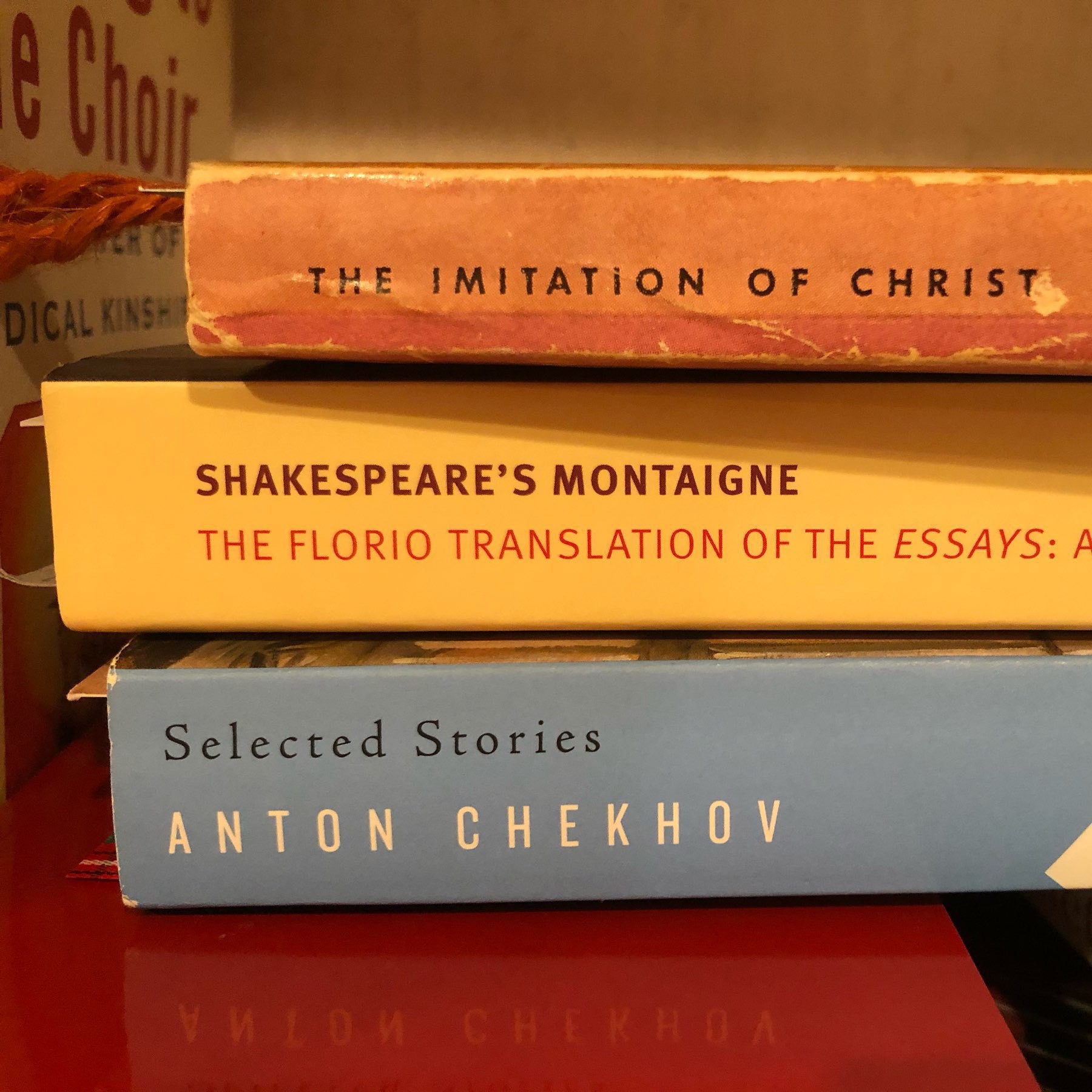
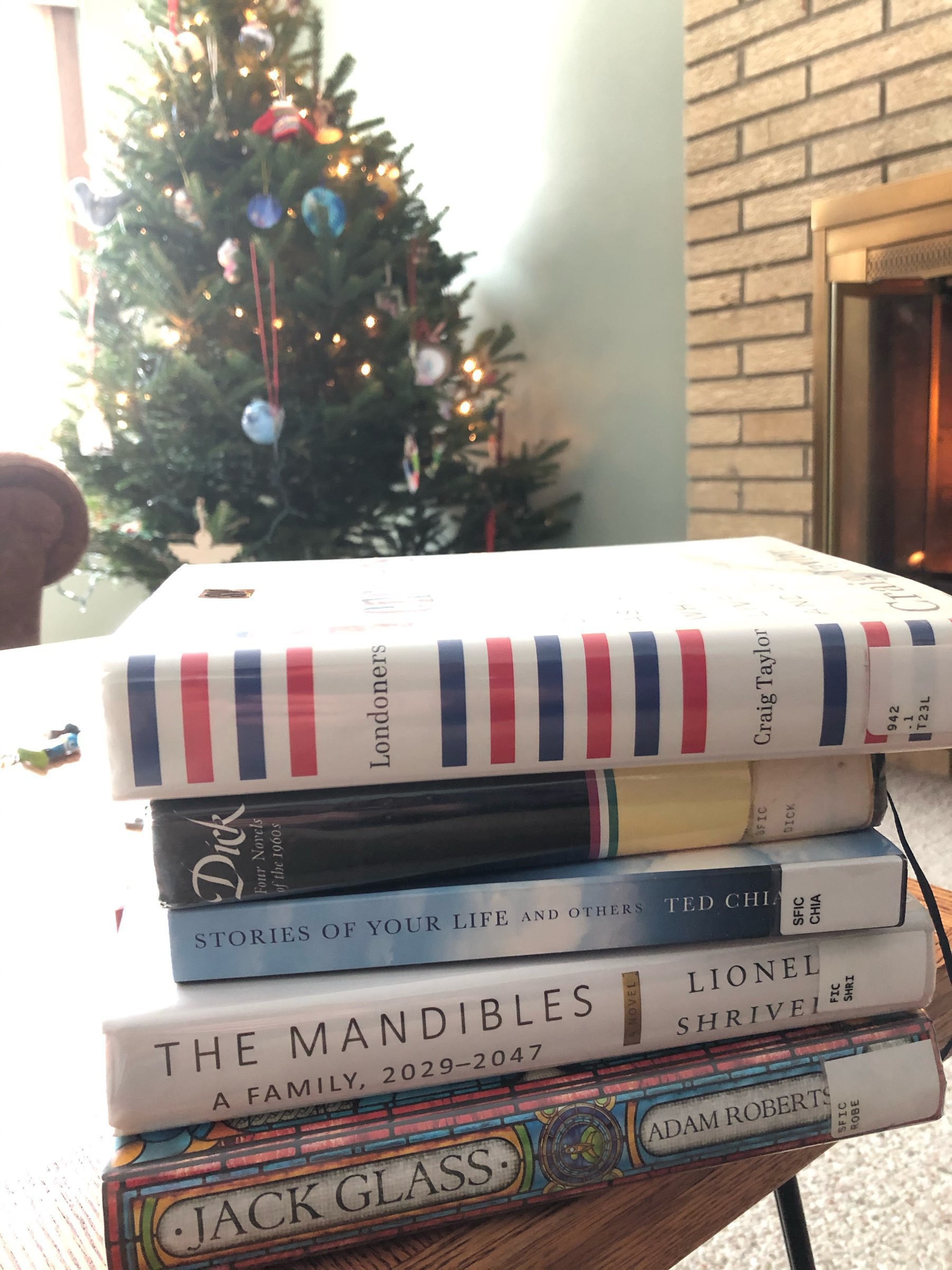
My selections from our trip the Shoreview Public Library today. Looking forward to some reading time over the next few days off… but I may have overestimated just how much time I’ll have. 📚
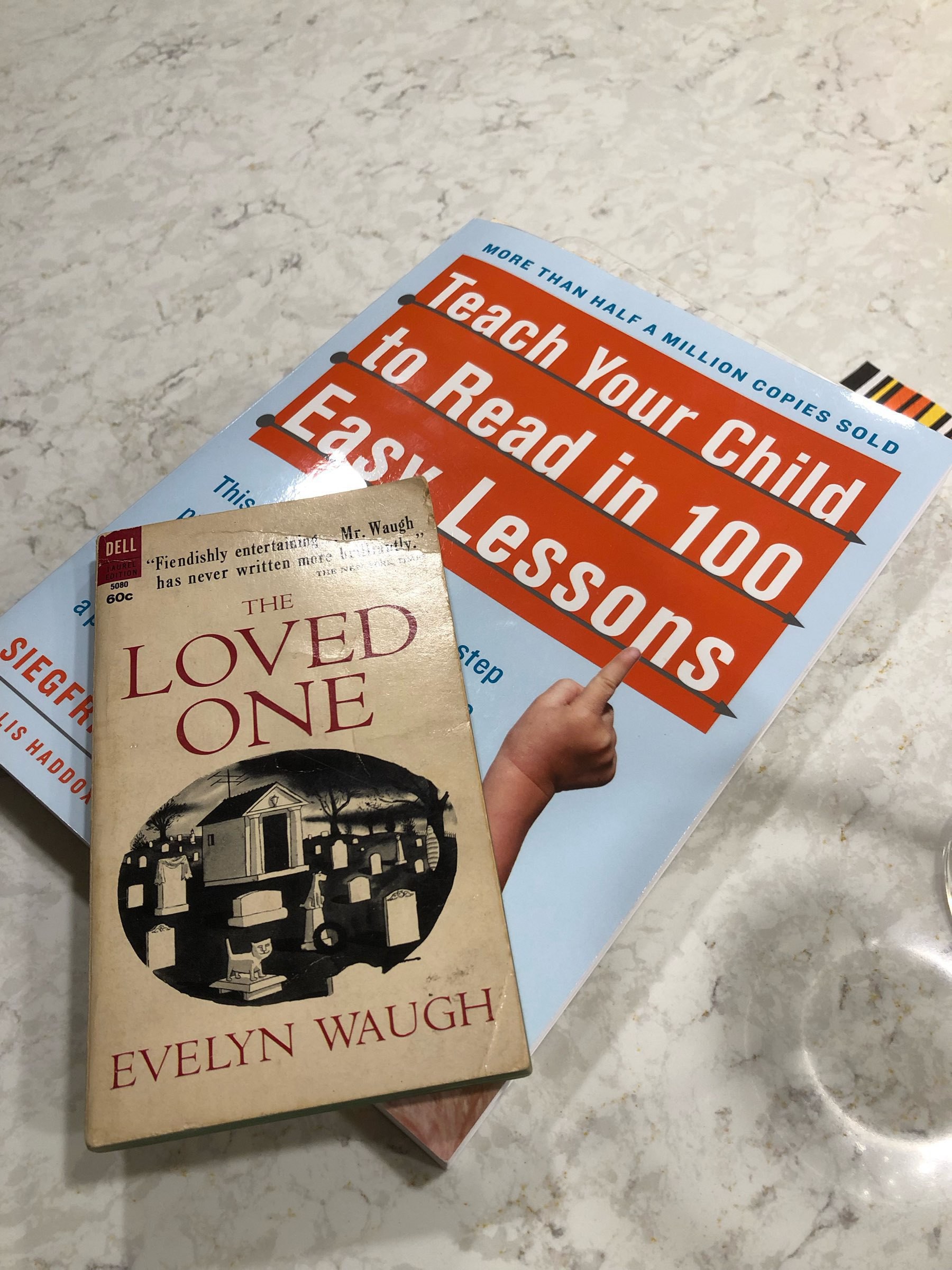
Waugh’s satire of Hollywood doesn’t hold up particularly well; still, there are some funny scenes and critiques of American culture that still ring true. Waugh doesn’t always quite get American culture. Like Graham Greene, he knew enough to oppose & ironize, but not quite enough to pull off a successful, stinging satire.
I’m enjoying Teach Your Child to Read, mostly because my twin four-and-a-half year olds are also enjoying the lessons and proud of their progress. In another life I’d be a preschool or kindergarten teacher—I love this age, when language is exploding, memories are forming, and they’re starting to learn that their creativity can being humor or beauty or joy to the world.
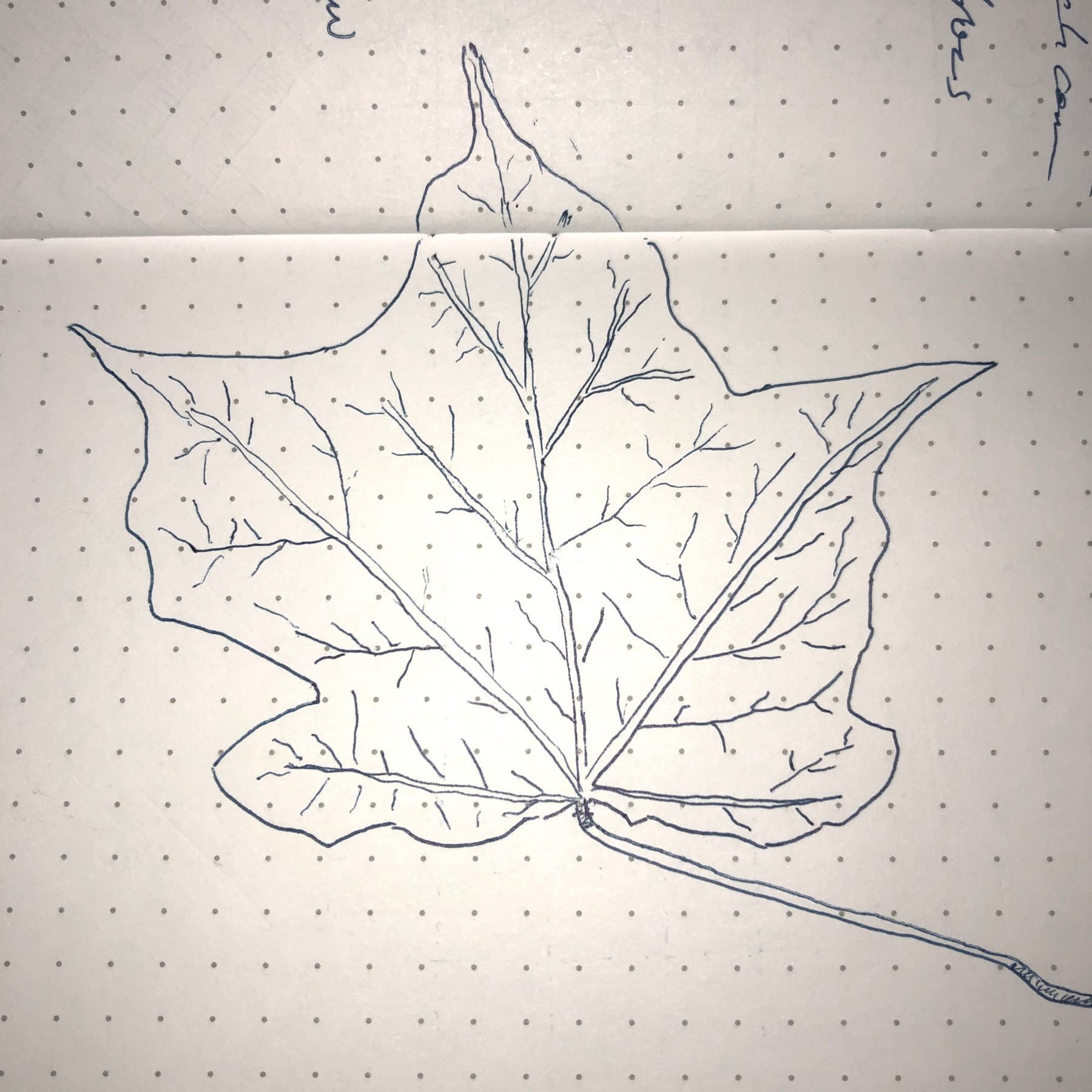
Autumn Leaf
One of Ruskin’s early lessons in The Elements of Drawing is to draw a leaf, as carefully and accurately as possible. Here’s my lunch-hour effort. 📚 🎨
Recently attempted, & abandoned 📚:
Current reading 📚:
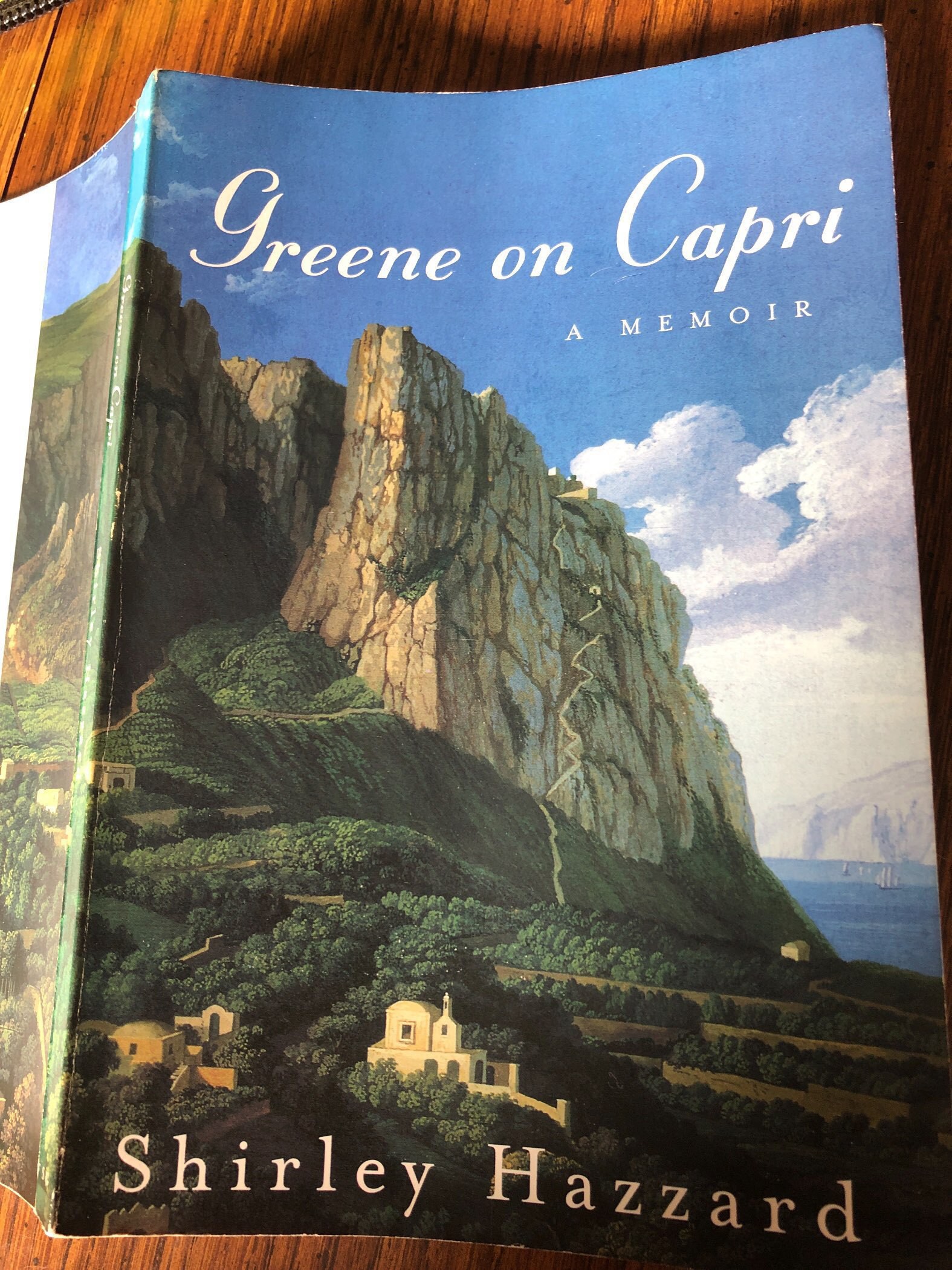
Shirley Hazzard’s Greene on Capri recounts the relationship that Hazzard and her husband, the Flaubert scholar and translator Francis Steegmuller, had with Graham Greene over two decades, from the late 60s to the late 80s. Their friendship started when, in a Capri cafe, Hazzard overhead Greene struggling to remember a line from a minor Robert Browning poem. Hazzard, who seems to have most of the English literary canon memorized, walked up to him, reminded him of the line, and walked away. Greene, intrigued, struck up a conversation at their next encounter, and the friendship was born.
Hazzard’s book is wonderful for several reasons. Chief among them is the fact that it’s as much a portrait of Capri as of an aging, cantankerous Graham Greene: for such a small island, its history is remarkable. (Henry James called it “beautiful, horrible, and haunted.")
Another of the book’s delights is the wide range of minor characters that flicker in and out of its pages, among them Hazzard’s learned husband Francis Steegmuller, the vibrant Harold Acton, Norman Douglas, Edwin Cerio, Giorgio Weber, and the Russian ballet dancer and choreographer Léonide Massine.
Hazzard’s own wit and rich knowledge of literature are evident throughout. Her sentences are typically simple, and can quickly shift to stunning:
Thinking of those times of transition [throughout Capri’s history]—and of their violations, contested in vain and now institutionalized and extended—a lover of Capri must gratefully wonder that beauty continues to prevail there—not as touristic prettiness, but in the grand and ultimate indifference of Nature to the antics of humankind. In a future age, perhaps, even today’s silliness may slide away, as have the courts of emperors, and the incursions of centuried invaders.
Erudite, literary memoirs are one of my favorite genres, and this book is perhaps my favorite of them all.
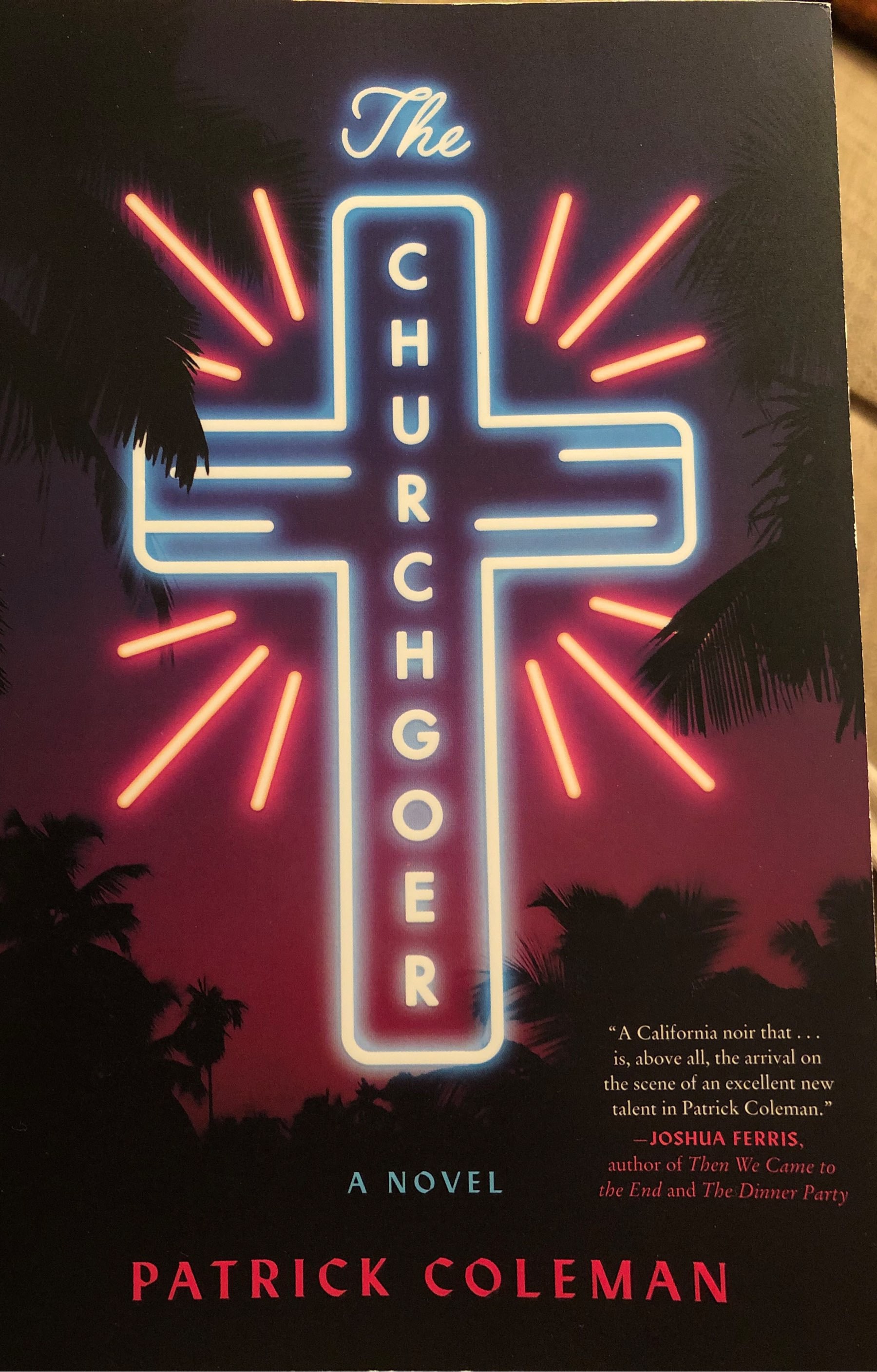
The Churchgoer
I stayed up late to finish The Churchgoer, a new novel written by Patrick Coleman. It’s San Diego noir about mega-churches, faith and doubt, and about learning to accept love from others, despite unshakeable belief that you don’t want or deserve it.
It’s so good. The voice is brilliant from start to finish. The narrator and central character is a former youth pastor turned atheist. His theological training gives him exegetical and etymological habits that won’t die, though his faith has; they’re a source of brilliant and fresh metaphor.
The narrator, Mark Haines, skewers American mega-church evangelicalism for being parasitical on the latest trends in pop culture, no matter how little those trends have to do with Christianity. He scorns the superficial sense of “mystery,” invoked in ways that are “about as humbling as the Grand Canyon printed on a poster about hard work.” For those who have spent any time within American evangelicalism, critiques like these may ring true. Others simply reveal the limits of Haines’s own religious experience and education. He’s far from perfect, but he’s decent enough—and endearingly full of wild ideas about God, Scripture, and the church.
By the end of the novel, Haines’s self-righteous anger at his former church and life has grown wearying—but he’s grown weary of it himself, and shows signs of recognizing that the deep and real flaws of that world don’t give him an excuse for a life of resentful bitterness. Haines’s past is filled with deep pain and sorrow. But by the novel’s end, he’s surprised to find some reasons for hope.
I loved this book, and it makes me want to revisit Christopher Beha’s What Happened to Sophie Wilder, which shares some themes and which I also loved. Perhaps I’ll write more about the two books once I do so. In the meantime, I highly recommend The Churchgoer to you.
I made an Apple Music playlist of Hans Castorp’s favorite music in the “Fullness of Harmony” chapter of The Magic Mountain. (Full disclosure: there’s lots of opera.)
Amazing that it’s so easy to enjoy the same music that a fictional character listened to 110 years ago! 📚 🎶
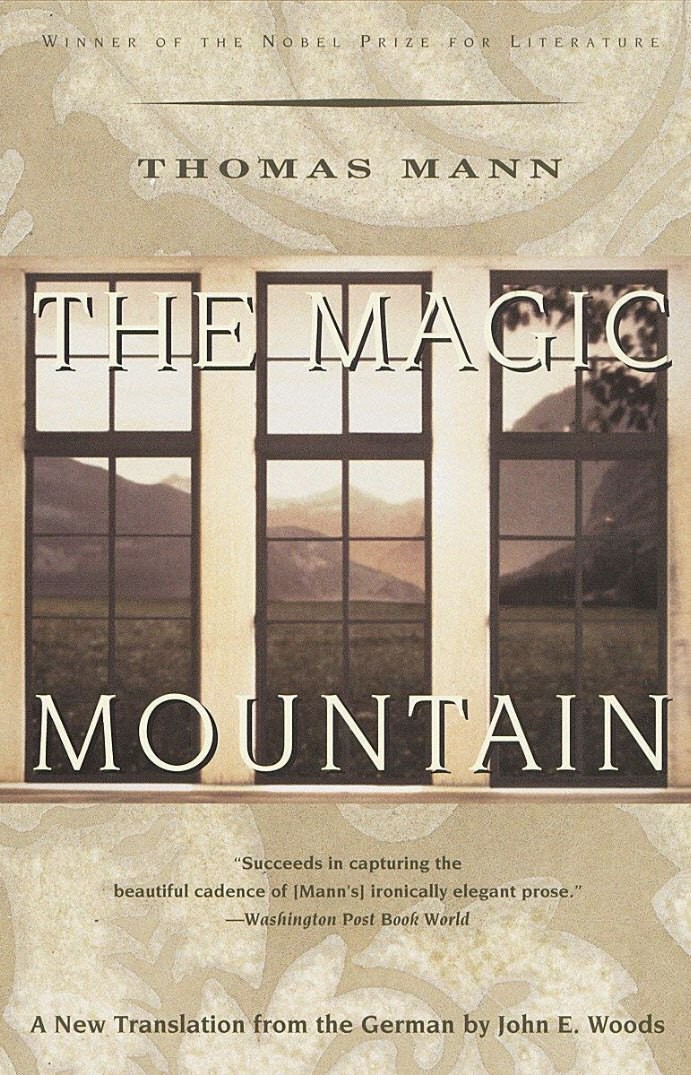
I’m excited to be co-leading a reading group on Thomas Mann’s wonderful novel The Magic Mountain this summer. The novel is truly delightful: long, funny, and strange; a novel that explores pre-WWI Europe. If you’re looking for a big book to read this summer, take a look! 📚
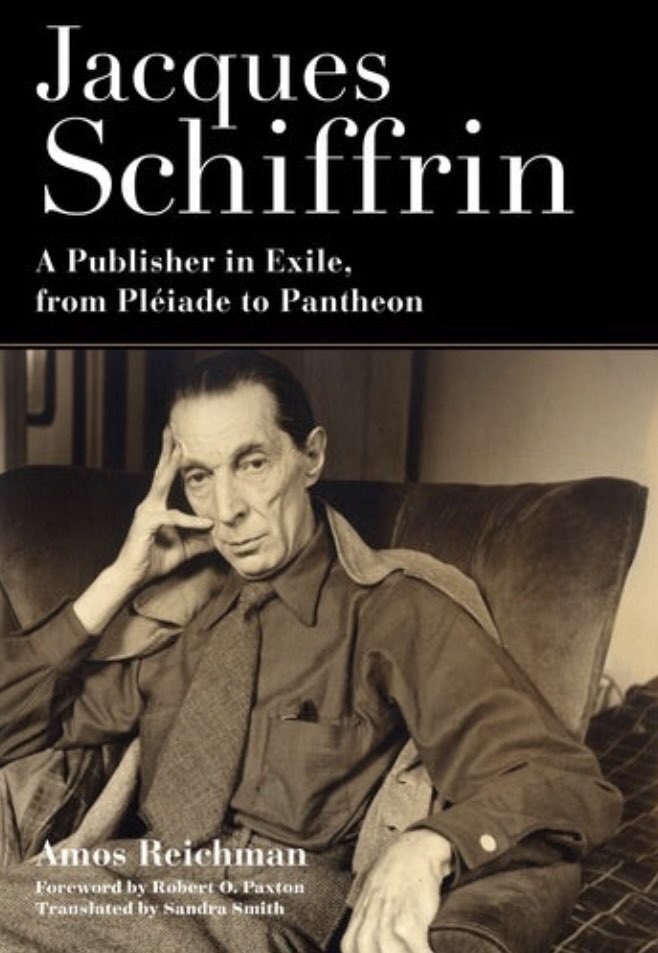
I wanted to create something useful and practical, you see… And since I also loved books, I was determined that they be as beautiful as possible. That’s all there is to it.
~ Jacques Schiffrin, qtd. in “On Founding One of Literature’s Most Beautiful Collections” 🔗 📚
Publicly manifested prosperity might well hide a deeper sorrow than we at first could imagine.
~ Fr. James V. Schall, on the moral vision of Samuel Johnson’s essays 🔗 📚
I’m re-reading a favorite novel, Thomas Mann’s The Magic Mountain, preparing for a reading group this summer.
Looking for a good summer read? I’d highly recommend MM—you can’t go wrong with a long, philosophical novel about time, sickness, & death. (It’s funny, too!) 📚
Here’s a delightful symposium on personal libraries. The best entries, in my opinion, are those from Sarah Ruden & Peter Travers.
The symposium inspires me to write the story of my own personal library. I’d love to read others from the microblog community, as well. 📚
Recommended: this excellent review of a book I plan to read as soon as possible: Martin Hägglund’s This Life: Secular Faith and Spiritual Freedom. 📚
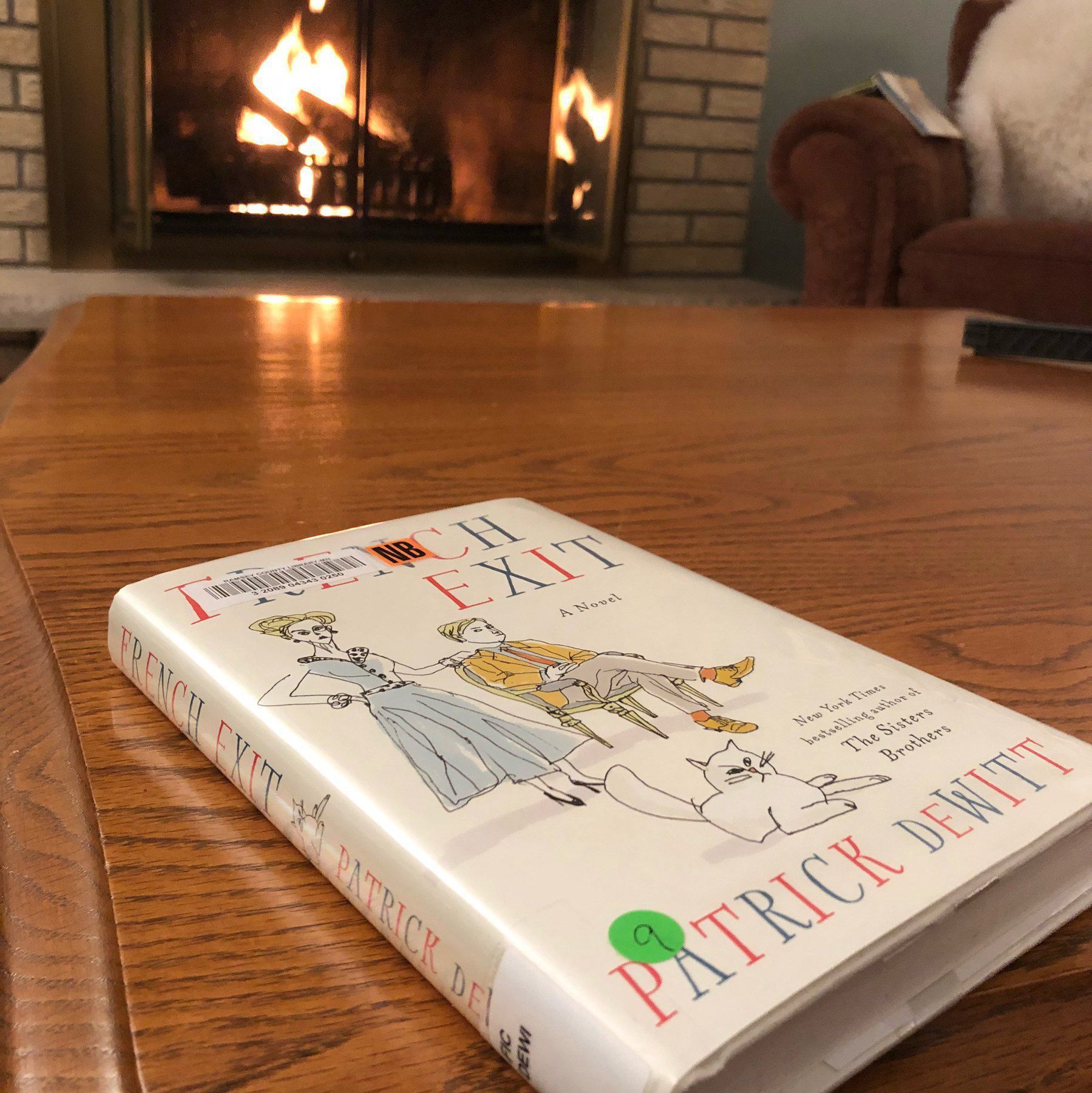
I read a wonderful novel tonight, Patrick DeWitt’s very dark & very comedic “tragedy of manners,” French Exit. (h/t the display stand at the local public library.) 📚
I hadn’t heard of translator Anthea Bell until I read her obituary yesterday. But then I realized that the day before, I had started one of her translations: of Stefan Zweig’s The World of Yesterday. So far, the book is profound, tragic, & absolutely captivating. 📚
Happy 85th birthday to the great Wayne Shorter! We mere mortals can celebrate by reading Ethan Iverson on Shorter’s transcendental year, 1964.
While you read, listen to his albums from that year: Night Dreamer, Juju, & Speak No Evil. 🎂📚🎶
I recently finished re-reading David Grene’s memoir, Of Farming & Classics. Grene balanced action and contemplation in his life in a truly remarkable way: he spent half the year teaching classics in the University of Chicago’s fascinating Committee on Social Thought, then the other half farming, first on a small farm in Illinois, then back on small farms in his native Ireland.
His memoir is a charming little book. Just 160 pages, it’s focused and delightful, pushing against our assumptions regarding the nature of both farming and education. Since Grene’s life was so focused on these two things, there’s no real struggle between chronology and theme in the book: the two themes run neatly in parallel through his life, from farming in summers and learning Greek as a boy through his remarkable career at the University of Chicago, especially under its idiosyncratic wunderkind president, R.M. Hutchins (who became president of the university when he was 29!).
The final chapter, a defense of fox hunting, feels strangely out of place and disappointingly polemical compared to the rest of the book; this chapter aside, the book deserves its place on my shelf of contemplative, contrarian agrarians, next to his kindred spirit Wendell Berry.
P.S. ~ One of the final pages of the book mentions a recording of Grene reciting passages from Othello; the website pointed to and the bookstore mentioned as sources of the recording are both shuttered. If anyone knows where this recording can be found, I’d be grateful!
Michael Dirda, typically excellent, recommends two recent books on Stoicism and ancient philosophy more broadly.
H/T to him for referring to Farnsworth’s Classical English Rhetoric and Classical English Metaphor, both of which I’d somehow never heard of before tonight. 📚
I came to this task as a journalist, not a literateur, and I have remained one to this day. I have high literary standards and delight in the expression of strong opinion, literary and otherwise, but I also read a book as if I were a reporter: looking for what it is “about” in the deepest sense of the word, determining what matters about it and what doesn’t, trying to give the reader a feel for what it is like as well as passing judgment on it.
. . . Furthermore there is the matter of the future of books — and thus of book reviews — in a culture that is evolving as ours is. People constantly ask me about this, as if I knew something, when in truth I know nothing. I have no doubt that books will survive and perhaps even thrive in some form, but as a lover of bound and printed books I am uncomfortable, to say the least, with the rise of e-books, even as I readily acknowledge that they offer exciting new possibilities for transmitting the essential material of books to more readers than traditional books now reach. Still, I love to look at the bookshelves in our apartment and to be reminded by the title of one or another of the pleasures it once gave me and may yet give me again. To the best of my knowledge no one has yet figured out how to offer a similar experience with e-books.


