Reading
NB, publishers: describing an author as a “Forbes 30 Under 30 scientist” makes me want to read their book much, much less. 📚

Finished reading: Laurus by Eugene Vodolazkin.
My second read; it’s as beautiful and profound as it was the first time through.📚
I’m heading to Chicago this weekend for a birthday celebration with my father & brother. I’m eager for some bookstore recommendations. Any advice, Chicagoans? 📚
On Brad East’s blog, Denise Levertov’s Good Friday poem “On a Theme from Julian’s Chapter XX”:
Every sorrow and desolation He saw, and sorrowed in kinship.
✝️📚🔗
[Early book collectors] supported the lively culture of book hunting that still goes on, diminished but not dead yet, in the auction houses and antiquarian bookshops of New York, Boston and other cities.
Can this gentle, humane culture survive the attritions of social media and the carceral state? In a way, it already has.
~Anthony Grafton, in an delightful LRB review-essay of Denise Gigante’s new book. 📚

Currently reading: The Secret Commonwealth by Robert Kirk
A gloriously strange book from 17th-century Scotland. 📚
What is mobile is always the most just.
~Robert Walser. So many great sentences in Walser. 📚
Every last silly little thing has its unspeakably swift justification, its good clever grounds.
~Robert Walser in 1907, writing about the Internet 📚
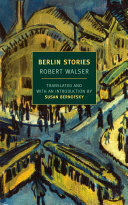
Currently reading: Berlin Stories by Robert Walser 📚
I encountered a stunning book of photos on the Getty’s website today: Kazumasa Ogawa’s Some Japanese Flowers, from 1896.
19th-century photograph is always shocking & disorienting—how foreign, yet contemporary. 📚

Currently reading: The Battle for Your Brain by Nita A. Farahany 📚
Her contention is that control over our own inner life will become increasingly fraught in coming years, as advances in neurotech & pharma combine to create new ways of monitoring, interpreting, & responding to our brainwaves.
I’m only a couple chapters in, but she lays out so clearly how tech is building on-ramps to this surveillance—through gamification, virtual reality, & other developments that are pitched as innocuous & “free”.
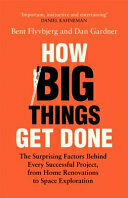
Finished reading: How Big Things Get Done by Bent Flyvbjerg 📚
For the most part, a very good and useful book on project management—research grounded in reality, presenting some useful heuristics. Fans of Taleb & Kahneman/Tversky will like it.

Nicholas Dames on literary studies 🔗 📚
What happened to literary studies?
If professionalization was the flaw in the construction of the bridge, making it unstable, it turns out there’s a meteor heading for the bridge anyway: the steady diminution of literature’s role in a culture where electronic, networked media is dominant. […]
By lowering the barrier to entry, the Internet encouraged an early 21st-century efflorescence of occasional criticism and spontaneous theorizing that fostered vibrant subcultural readerships.
I believe that the coming decades will be shaped by a restoration of the humanities to non-professional, non-credentialed, non-university contexts. The Internet will continue to provide new forms not just for criticism but for pursuing literary education outside formal degrees.
This will be a good thing, though, sadly, it will be accompanied by the closure of many liberal arts colleges.

Finished reading: Skin in the Game by Nassim Nicholas Taleb 📚
Currently reading: How Big Things Get Done by Bent Flyvbjerg 📚

Currently reading: Night Train by A. L. Snijders; translated by Lydia Davis 📚

Currently reading: War and Peace by Leo Tolstoy 📚
Currently reading: Skin in the Game by Nassim Nicholas Taleb 📚
Aesthetic judgments in an anti-aesthetic age 📚 🔗
Just because we don’t believe in aesthetic standards as a culture doesn’t mean we aren’t making constant aesthetic judgments that rely on a wide range of hierarchies:
[Study authors] found that writers ‘with an elite degree (Ivy League, Stanford, University of Chicago) are nine times more likely to win than those without one. And more specifically, those who attended Harvard are 17 times more likely to win.’ They found that half of the prize-winners with an MFA “went to just four schools: [University of] Iowa, Columbia, NYU, or UC Irvine. Iowa has special clout: its alumni ‘are 49 times more likely to win compared to writers who earned their MFA at any other program since 2000.'"
I find the author’s conclusion inspiring:
Today when asked for advice about how to be a writer, I say: Find writing you love and follow it. Make those writers your writers. Read each other, publish each other, create literature that speaks from where you are.
You don’t need a BA to do this, much less an MFA. We need to rebuild cultural institutions outside the confines of our academic-media-publishing complex.